
Why Protective Cases are Essential for Defense Electronics
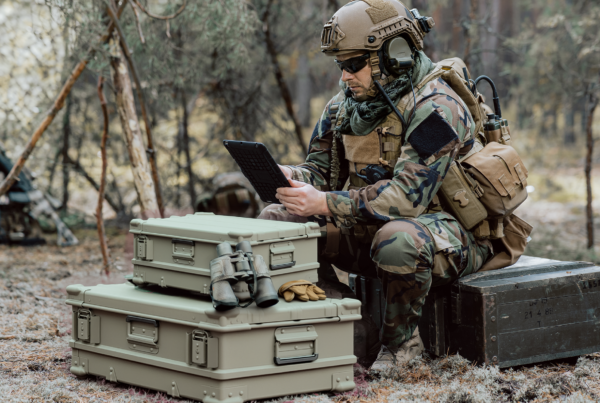
Military operations rely on precision, readiness and the dependable performance of essential equipment in rugged environments. From intelligence, surveillance, reconnaissance (ISR) systems, deployable ground satellites, UAVs, tracking equipment, and electronic warfare platforms, every asset needs to be stored and transported securely and remain fully operational under challenging conditions during deployment.
Selecting the right equipment case is essential for protecting defense systems during transportation, storage, deployment, and field operations. Rugged military cases are engineered to provide protection against water, dust, impact, vibration, extreme temperatures, and electromagnetic interference (EMI).
DESAPRO engineers its products to meet strict military standards and protection ratings, including MIL-STD-810, MIL-STD-461, and IP ratings, addressing different aspects of equipment protection. MIL-STD-810 provides physical durability, MIL-STD- 461 ensures electromagnetic compatibility, and IP defines sealing against dust and water. Together, they deliver reliability and strengthen operational readiness in harsh rugged environments.
What Does System Integration Mean in Rackmount and Transport Case Construction?
Protective cases serve as the physical backbone for highly complex equipment. System integration of defense electronics or assets in a protective case is the comprehensive engineering process.
Some of the key benefits of implementing system integration during protective case construction include:
Custom Cases for Integrated Equipment and Demanding Field Deployments
Defense assets rarely follow a one-size-fits-all configuration. System integration allows rackmount and transport cases to be engineered around the mission and equipment rather than adapting the equipment to the limitations of a standard enclosure. Internal mounting structures, chassis, power distribution, connectors, cable routing, cooling systems, displays, control panels, environmental protection, and special foam cut outs can all be incorporated into the case design. This creates a cohesive case that supports both the physical protection and operational requirements of the system.
The development of military packaging requires a thorough analysis of specific mission requirements. Each package is designed for specific equipment, transportation methods, and operational environments. This results in customized rackmount cases and transport cases and racks that perfectly match the dimensions and vulnerability of the hardware to be protected.
For demanding field deployments, this level of customization provides flexibility as embedded electronics evolve. By engineering around the complete equipment configuration and operational profile, DESAPRO develops integrated rackmount and transport cases that balance rugged protection, functionality, mobility, and rapid deployment without compromise.
Targeted Protection for Vital Defense Assets
Integrated case construction provides protection by engineering enclosure around the exact equipment it houses, whether configured as a rackmount or transport solution.
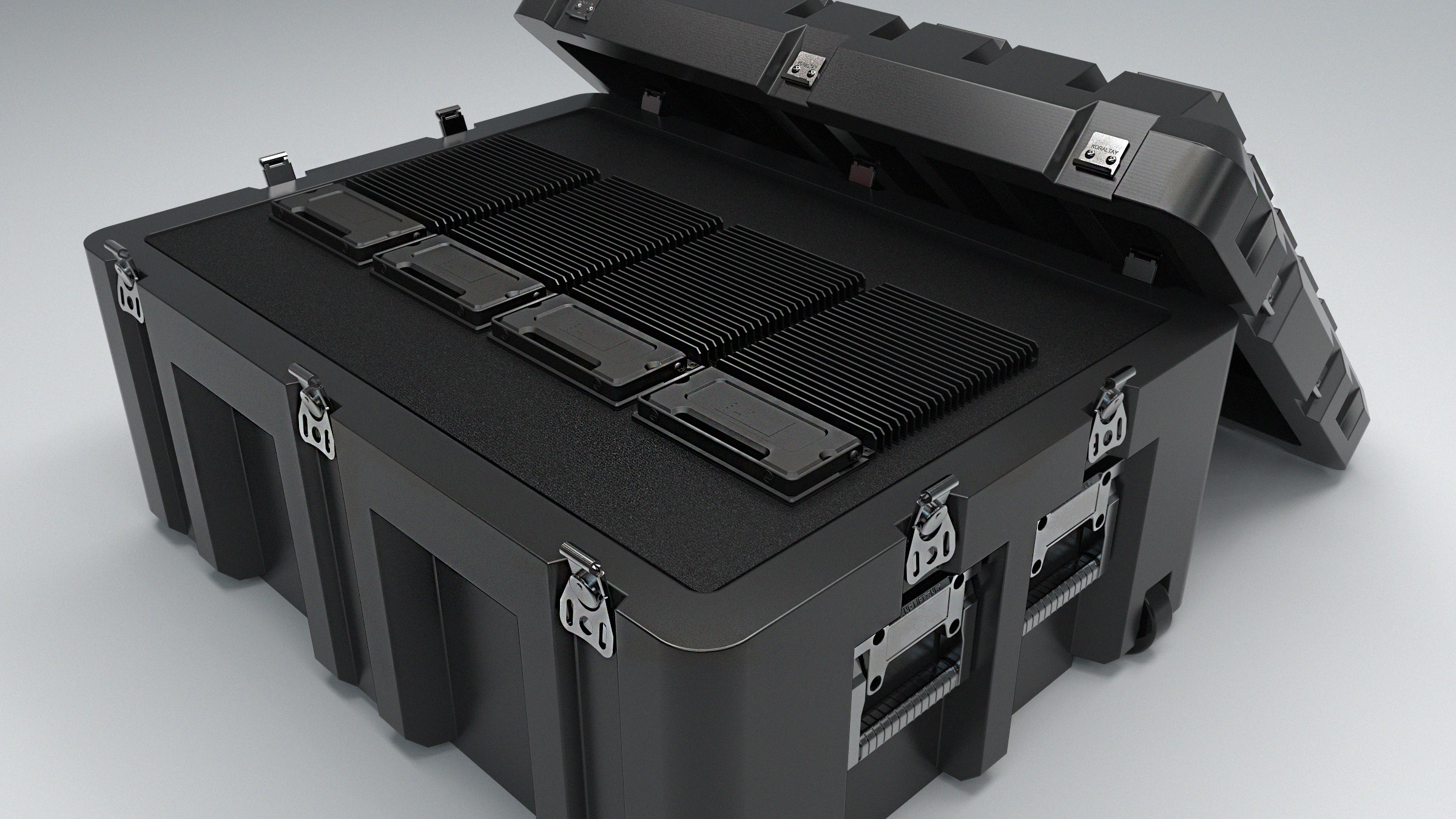
For transport cases, custom foam inserts provide precision-cut padding designed to fit a specific product footprint. Fabricated based on specific product requirements, these custom inserts offer superior shock absorption compared to off-the-shelf alternatives. Light metal STANEX transit cases deliver high resistance against drop shock, mechanical shock and vibration. When sealed, they provide robust protection against sand, dust, snow, ice and water intrusion.
Built-In Electromagnetic Compatibility (EMI/EMC Protection)
Electromagnetic shielding prevents EMI and ensures EMC by acting as a conductive barrier. Because modern defense devices operate within dense networks surrounded by countless signals, adequate shielding is critical to prevent cross-interference that compromises performance and safety. As part of a system-integrated protective case, EMI shielding can be engineered directly into the enclosure alongside equipment mounting, grounding and bonding, connector interfaces, and cable management.
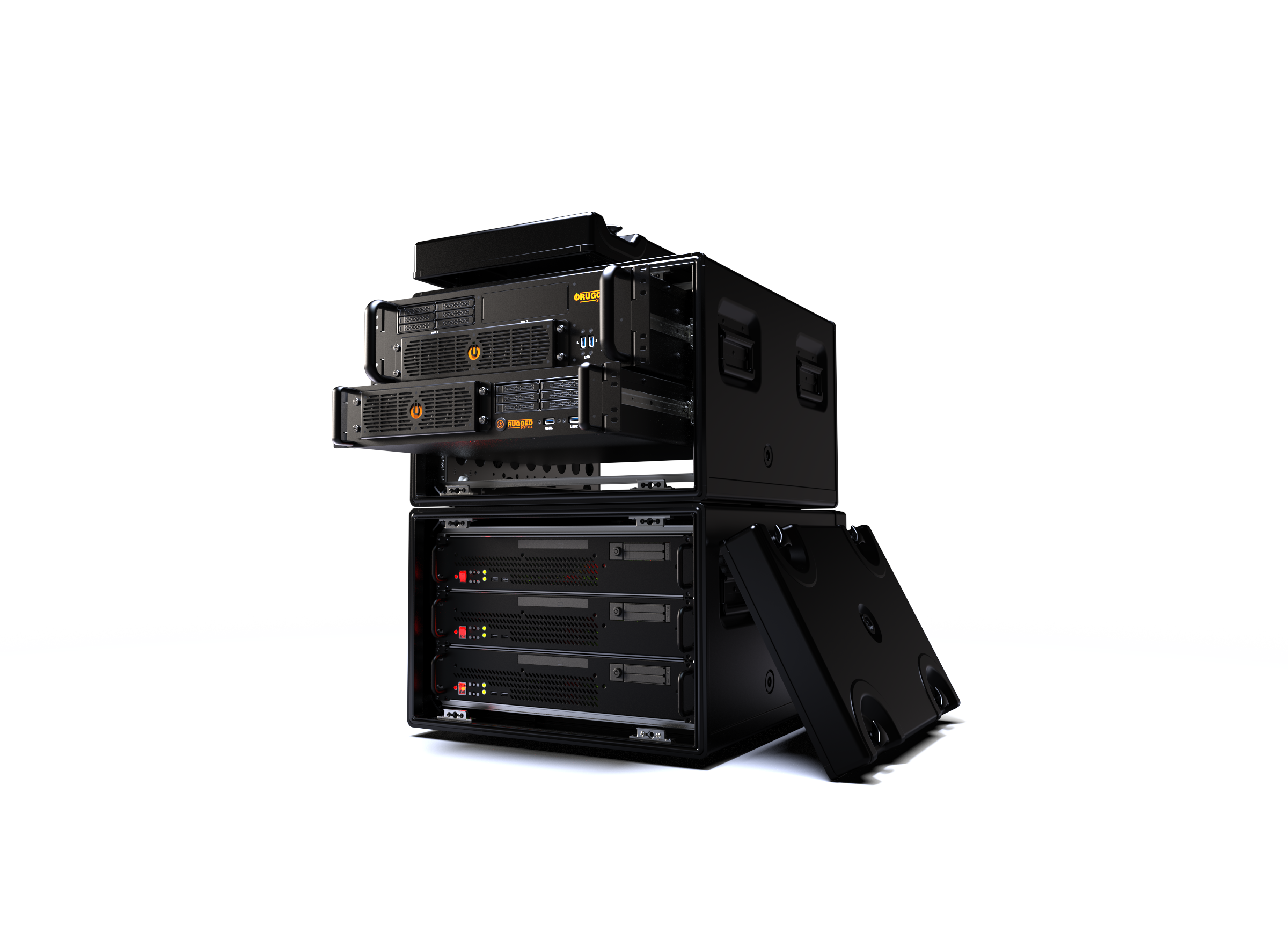
By integrating this approach, the protective case functions as an active part of the system’s electromagnetic protection strategy, rather than a passive physical barrier. The DESAPRO MILEX shielded cases function as a Faraday cage utilizing conductive aluminum construction, electrical grounding, sealed designs, and high-frequency shielding features to ensure full EMI/EMC compliance.
Advanced Thermal Management for Extreme Environments
Keeping critical military equipment cool at extreme temperatures is vital to mission success. Thermal management is a defining factor in system performance across advanced electronics. Through system integration, cooling is addressed at the initial design level, helping engineers improve system longevity, reduce maintenance, and support reliable performance in demanding environments.
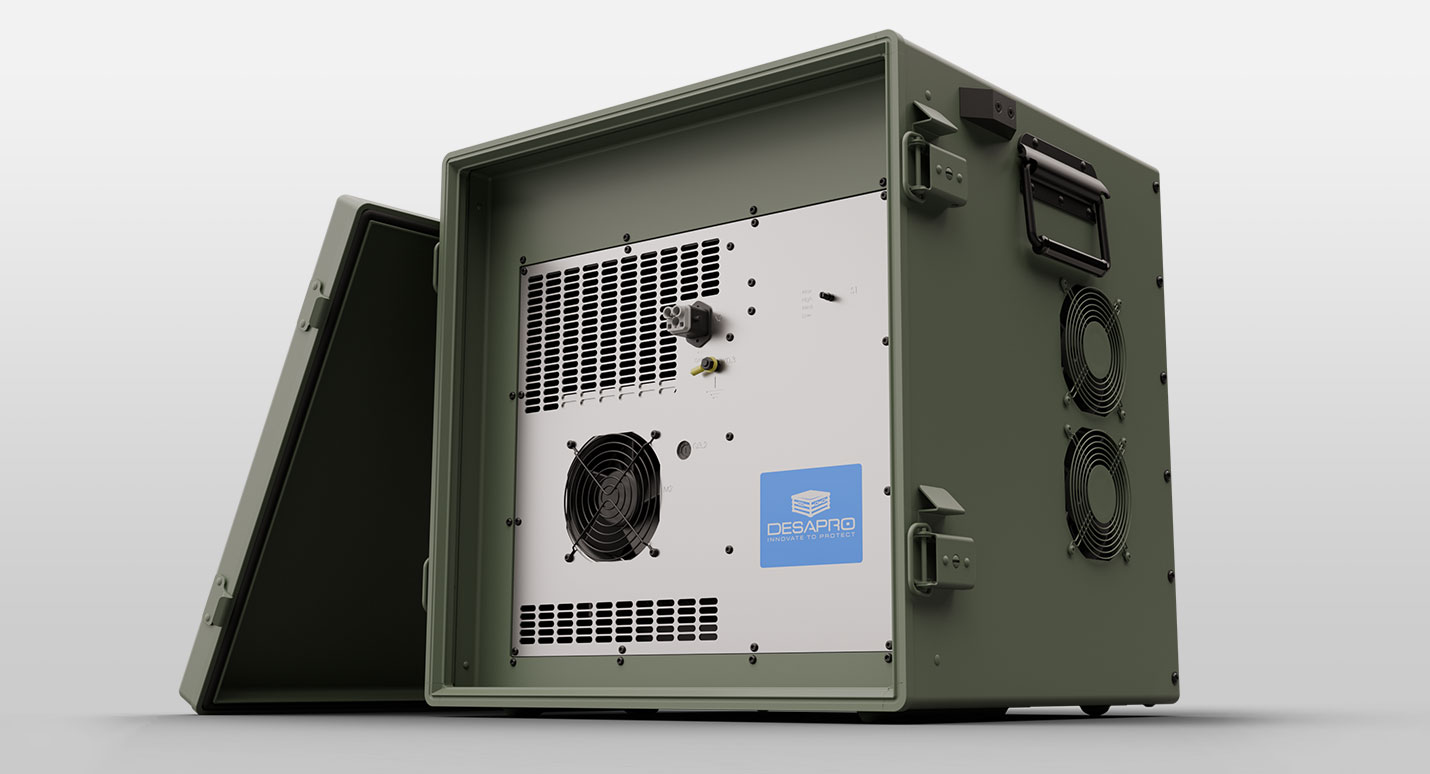
Depending on equipment heat load, available electrical power, enclosure configurations, and environmental conditions, DESAPRO engineers can configure cooling solutions ranging from simple fan systems to sealed heat exchangers, thermoelectric units, and fully integrated.
Protection Starts with Integration
For critical defense electronics and deployable assets, a rackmount or transport case should do more than shield equipment from the outside environment, it must actively support the way the system operates, connects and performs in the field. Design-level system integration enables wire harnesses, connectors, foam solutions, EMI/EMC shielding, shock and vibration protection, and thermal management to be engineered as a cohesive solution.
This integrated approach mitigates the compromises that often come with adapting specialized electronics to generic protective enclosures. DESAPRO combines rugged case construction with systems-level engineering to develop purpose-built transport cases that safeguard vital electronics from storage to deployment.
Successful equipment integration starts with understanding the system’s mechanical, electrical, thermal, and environmental requirements. Contact DESAPRO to discuss a custom rackmount or transport case solution engineered around your application.
FAQs
What is system integration in rugged equipment case construction?
System integration is the process of engineering a protective case around the equipment it houses, incorporating components such as mounting structures, power distribution, cable routing, connectors, cooling systems, and EMI shielding. This approach helps ensure the enclosure supports the system’s physical protection, functionality, and operational requirements.
What are the benefits of system integration in military equipment cases?
System integration offers several benefits, including customized equipment fit, improved shock and vibration protection, integrated EMI/EMC shielding, and more effective thermal management. By addressing these requirements during the design phase, manufacturers can develop rugged equipment cases that support reliable operation and efficient deployment in demanding defense environments.
How do military equipment cases protect electronics from Electromagnetic Interference (EMI)?
Military equipment cases can incorporate conductive materials, shielding, grounding, bonding, and properly designed connector interfaces to help reduce electromagnetic interference. DESAPRO’s MILEX shielded cases use conductive aluminum construction and integrated shielding features to support electromagnetic compatibility (EMC) requirements.
How is thermal management integrated into rugged military cases?
Thermal management is incorporated during case design by evaluating equipment heat loads, available power, enclosure configuration, and operating conditions. Depending on system requirements, solutions may include fans, heat exchangers, thermoelectric cooling, or active air-conditioning systems to help maintain suitable operating temperatures.