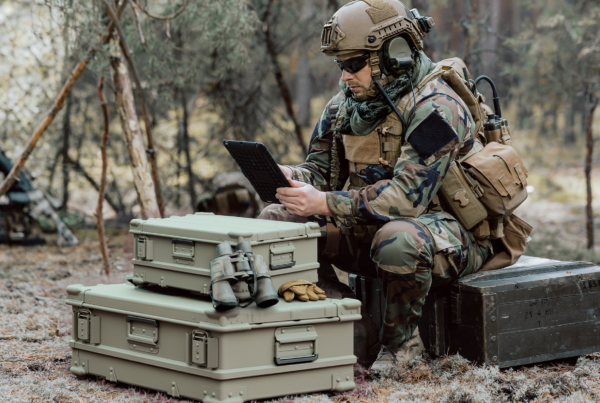

Modern defense systems are getting smarter. AI-powered sensors, autonomous unmanned systems, and the growing scale of advanced embedded electronics are transforming the abilities of defense systems. The immense computing power within these sophisticated next-gen electronics generates a significant amount of heat that must be accounted for. Thermal management has therefore become a defining factor in system performance across advanced electronics.
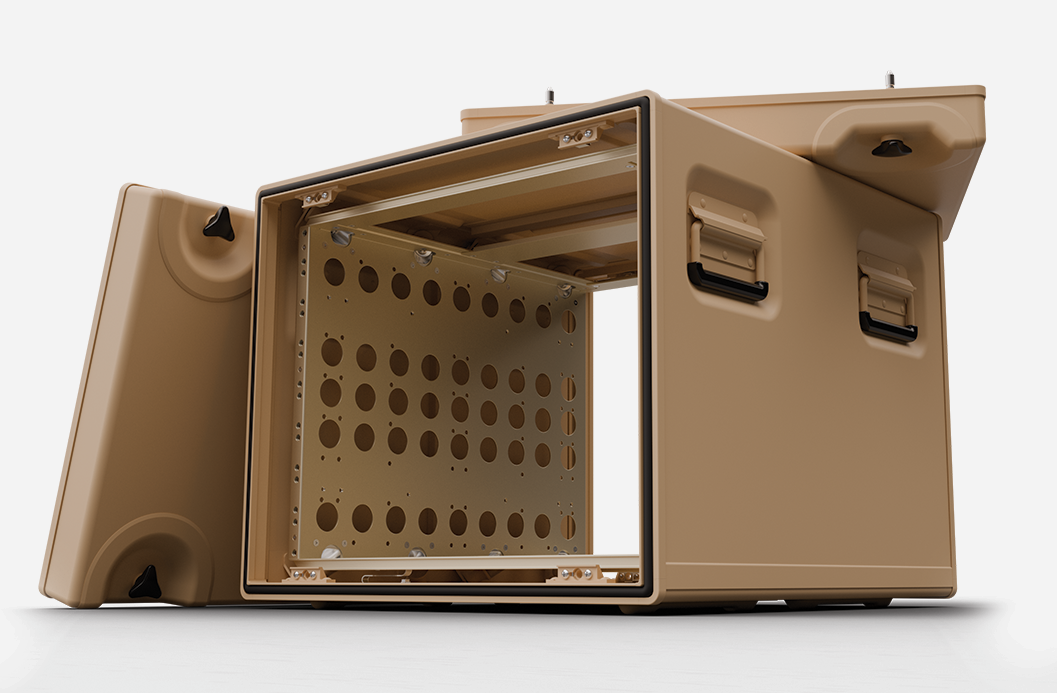
Traditional cooling approaches such as fans, vents, and heatsinks may become insufficient as processing densities increase and systems are required to operate inside sealed, ruggedized enclosures. Size, Weight, and Power (SWaP) requirements mean cooling systems cannot simply be scaled up, while fans and vents become more vulnerable in harsh operational environments.
As a result, rugged cases and rackmount systems are increasingly designed with integrated thermal management capabilities. These systems are designed to protect sensitive equipment from shock, vibration, dust, and moisture, but thermal buildup inside enclosed systems can create serious reliability issues. Effective cooling solutions help maintain safe operating temperatures and support reliable performance in demanding environments.
In defense applications, where reliability and operational readiness are non-negotiable, the importance of robust defense electronics cooling cannot be overstated.
Key Challenges that Cooling Solutions Address
Understanding the challenges and implementing proven thermal management strategies can mitigate these risks, keeping systems reliable, extending product life, and maintaining operational continuity. Some of the challenges that proper cooling solutions address include:
- Heat Dissipation: Today’s defense systems including radar, missile guidance, electronic warfare, and C5ISR platforms incorporate increasingly powerful processors, FPGAs, GPUs, and high-speed communications hardware. These electronic components naturally generate heat during operation. Without proper cooling, this heat buildup can lead to overheating, causing malfunctions, reduced performance, and permanent damage.
- Harsh Operating Environments: Many sensitive electronics must operate in harsh environments where temperature, vibration, dust, sand, and moisture are present. This reality drives demand for ruggedized cooling approaches that can preserve the required level of environmental protection. Depending on the application, the solution may use filtered airflow, a closed-loop heat exchanger, thermoelectric cooling, or an integrated air-conditioning system.
- Supporting Operational Readiness: Cooling solutions remove excess thermal energy from sensitive electronics to help prevent overheating, thermal throttling, and hardware failure. As operational resilience becomes a priority across industries, cooling solutions help maintain suitable operating temperatures, support continuous operation, extend equipment lifespan, and protect hardware in high-demand or extreme environments.
Managing heat efficiently is critical not only to ensure performance but also to maintain device safety and longevity. Two fundamental strategies—active and passive cooling—define how systems approach this challenge.
Passive Cooling
Passive cooling refers to any method of heat dissipation that does not rely on powered components such as fans or pumps. This form of cooling relies on conduction, convection, and radiation to transfer heat away from critical components into the surrounding environment. One of the most common forms of passive cooling is the metal heat sink, typically made of aluminum or copper, and attached directly to a component. These metals have high thermal conductivity and help spread heat over a larger surface area. The surrounding air then removes that heat through natural convection.
The benefits of passive cooling solutions include:
- High reliability due to few or no moving parts
- No electrical power required for heat removal and quiet operation
- Lower maintenance requirements and cost-effective installation
Although passive cooling solutions are efficient in terms of energy consumption, they have limits on the amount of heat they can dissipate and may be ineffective for components generating high power density or in environments with limited airflow. This is where active cooling solutions come into play.
Active Cooling
Active cooling is critical for managing heat in demanding applications. Unlike passive cooling, active cooling methods use powered components or systems to increase the rate at which heat is dissipated. Examples include fans, thermoelectric units, refrigeration-based air-conditioning systems, and mechanically pumped liquid loops. These systems overcome the limitations of natural convection, allowing them to manage much higher heat fluxes within a compact form factor.
The benefits of active cooling solutions include:
- Superior heat dissipation for high-power systems
- Precise thermal control
- Potential for cooling below ambient temperatures when refrigeration or thermoelectric technologies are used
- Flexibility in system design
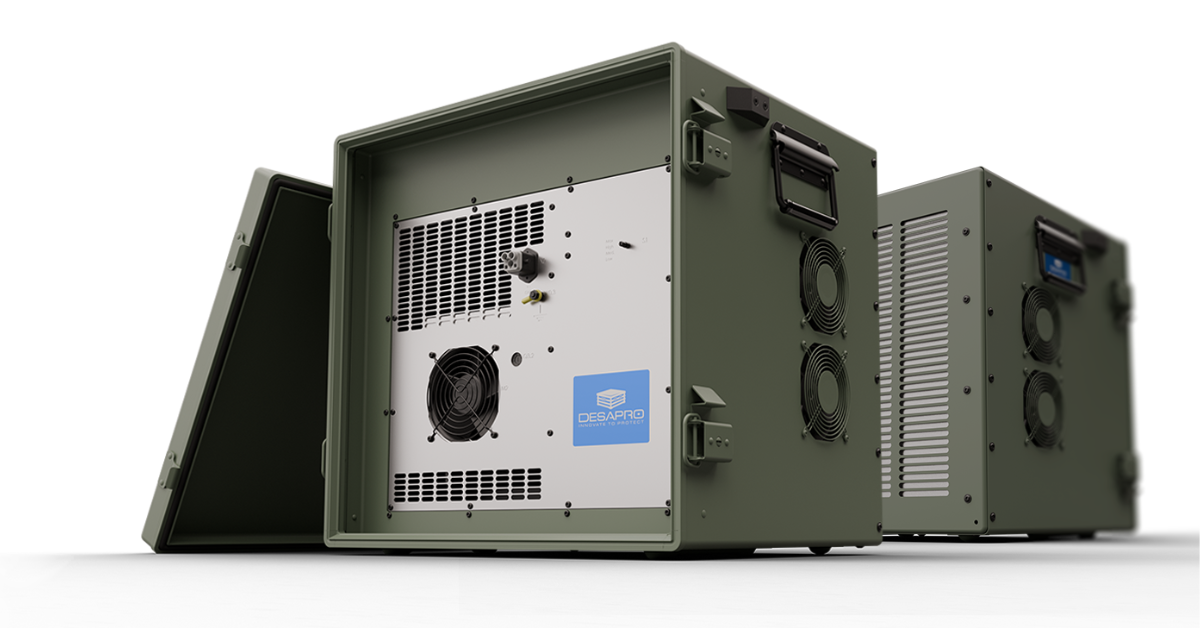
DESAPRO’s Approach to Thermal Management
Every application presents unique thermal requirements. Depending on equipment heat load, available electrical power, enclosure configuration, and environmental conditions, DESAPRO engineers can configure cooling solutions ranging from simple axial fan systems to sealed heat exchangers, thermoelectric units, or fully integrated KOOLEX active air-conditioning systems. This scalable approach allows customers to balance thermal performance, environmental protection, weight, power consumption, and maintainability for each mission.
The Future Is Built on Better Cooling
Advanced cooling represents more than just technology; it supports reliability, precision, and dependable electronics performance in harsh environments. From passive heat dissipation to advanced active cooling technologies, every system presents its own thermal challenges that require a tailored solution. By integrating cooling capabilities at the design level, engineers can improve system longevity, reduce maintenance, and support reliable performance in demanding environments.
DESAPRO’s cooling solutions are designed to meet these evolving requirements by combining rugged environmental protection with scalable thermal management technologies. As heat loads continue to increase and defense platforms become more powerful, advanced cooling solutions will remain a key factor in enabling the next generation of electronics.