Modern military operations rely heavily on advanced electronics to support communications, intelligence gathering, surveillance, navigation and decision making. From ruggedized computing systems in tactical vehicles to sensitive electronics deployed in unmanned systems and command centers, these technologies must perform flawlessly under the harshest environments. As defense systems become more mobile, interconnected, and data-driven, ensuring reliability, durability, and electromagnetic integrity has become more important than ever and are a driving force for rugged, secure, and adaptable transport solutions.
This is where military compliance standards play a critical role. These standards not only help ensure operational readiness but also support long-term equipment performance throughout transportation, deployment, and storage.
What Are Military Compliance Standards (MIL-STD)?
Military standards, known as MIL-STD specifications, are the backbone of defense packaging solutions. Military packaging standards serve a vital purpose within the defense industry, ensuring the safe, secure, and efficient transport of materials for military operations. These rigorous standards are in place for several crucial reasons, reflecting the unique challenges and requirements faced by the military.
When it comes to equipment used in defense applications, the standards that dictate their design, production and testing are distinctively rigorous compared to commercial products. Military technology must be at the forefront of innovation to provide a competitive edge. MIL-STD is designed to accommodate technological advancements while maintaining stringent quality controls. It balances the integration of cutting-edge technology with the reliability needs of military operations.
The Role of Rugged Equipment Packaging in Defense
As defense applications become more compact as well as sensitive, the need for packaging that absorbs shock, resists climate extremes and maintains structural integrity has quickly grown. The key features that make packaging vital for rugged electronics include:
- Material Selection: Constructed from durable materials such as aluminum that is lightweight and corrosion-resistant, ideal for mobile and aerospace applications and stainless steel known for its high strength with superior protection in harsh and corrosive environments.
DESAPRO’s COMEX GMT GlasMatThermoplastic composite technology provides a lightweight yet highly durable alternative engineered specifically for rugged rackmount applications. COMEX GMT cases offer enhanced thermal resistance compared to traditional composite materials, allowing lids and covers to be removed and reinstalled more reliably in austere operating environments where extreme temperatures may cause other materials to become more difficult to manipulate or reseal.
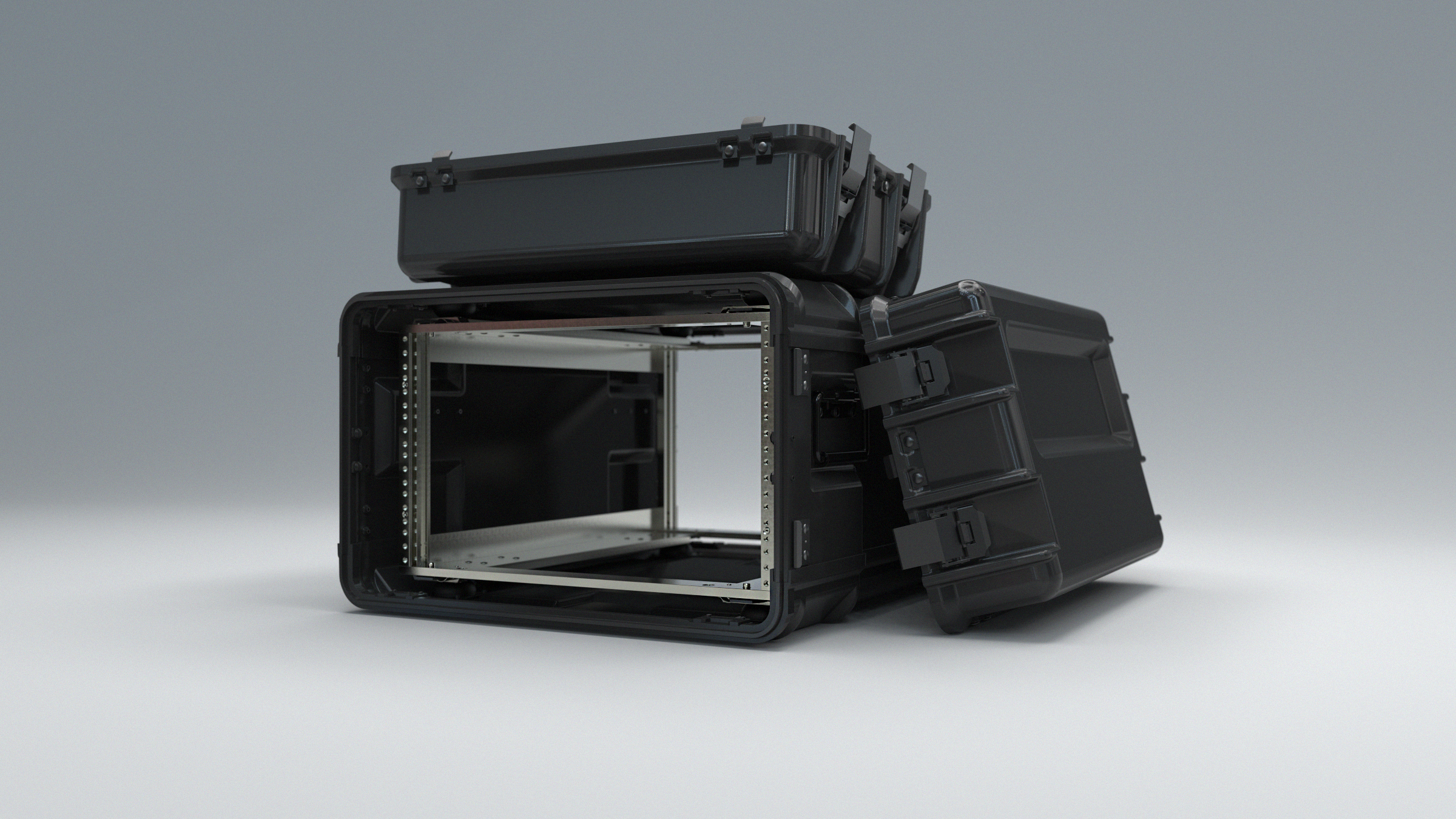
Traditional rotationally molded case designs also provide exceptional impact resistance, corrosion resistance, and long-term durability, making them ideal for demanding transportation and field deployment applications where rugged portability and environmental protection are essential.
- Environmental Resistance: Designed to withstand extreme temperatures, humidity, rain, dust, and sand, sealed with robust gasketing to protect internal components from environmental exposure.
- Shock and Vibration Protection: Engineered with reinforced walls for added durability, incorporates shock-absorbing mounts and vibration-resistant fasteners and helpsmaintaininternal component integrity during heavy movement and impact.
- EMI/RFI Shielding: Built with conductive materials or coatings to block electromagnetic and radio frequency interference and ensures stable performance of sensitive electronic systems.
- Thermal Management: Manages heat generated by electrical components to prevent overheating,utilizespassive cooling or active cooling solutions depending on application needs.
The development of military packaging requires a thorough analysis of specific mission requirements. Each package is designed for specific equipment, transportation methods and operational environments. This results in customized rackmount cases and transport cases and racks that perfectly match the dimensions and vulnerability of the hardware to be protected. This is where MIL-STD standards come into play.
MIL-STD-810 Environmental Testing
MIL-STD-810 is one of the most widely used military standards. It plays a crucial role in the design and ruggedization of electronics packaging for modern defense applications. MIL-STD-810 provides the testing framework to simulate harsh conditions, ensuring that the electronics case solutions are rugged enough to protect the internal components. Through rigorous testing for temperature extremes, vibration, shock, ingress protection, and more, MIL-STD-810 ensures the reliability and durability of rugged electronic packaging for military operations.
Protective solutions like rackmount cases must do more than shield equipment from impact; they must preserve performance, ensure electromagnetic integrity, and maintain environmental stability in the harshest operational conditions.
MIL-STD-461 Electromagnetic Compatibility (EMC)
In operational environments saturated with electromagnetic activity, reliable system performance is mission critical. MIL-STD-461 outlines testing procedures for conducted and radiated emissions, susceptibility to external electromagnetic sources, and grounding and bonding requirements to minimize system-level disruptions. By adhering to MIL-STD-461 guidelines, defense transportation cases can deliver robust solutions that enhance military capabilities in the presence of electromagnetic interference while ensuring long-term system reliability and performance.
EMC is an important parameter in the design of any electrical or electronic system. Modern military operations heavily rely on electronic systems, and any disruption to these systems can lead to severe consequences, compromising mission success.
Ingress Protection (IP) Ratings Explained
Ensuring equipment can withstand exposure to demanding operational environments is crucial. It’s essential to know how well a device is protected against dust and water. IP ratings provide a clear, standardized way to measure that protection.
The IP Code assigns a two-digit number to indicate the degree of protection. The first digit represents protection against solid objects, and the second digit represents protection against liquids.
At DESAPRO, our transport cases, rackmount cases, and cooling solutions are engineered for use in extreme conditions tailored to IP65 and/or IP67 protection.
IP65 offers complete protection against dust ingress and protection against low-pressure water jets from any direction. IP67 offers complete dust protection and can withstand temporary water immersion, making it more suitable for environments with significant dust exposure and intermittent water contact.
Compliance-Driven Protection for Modern Defense Operations
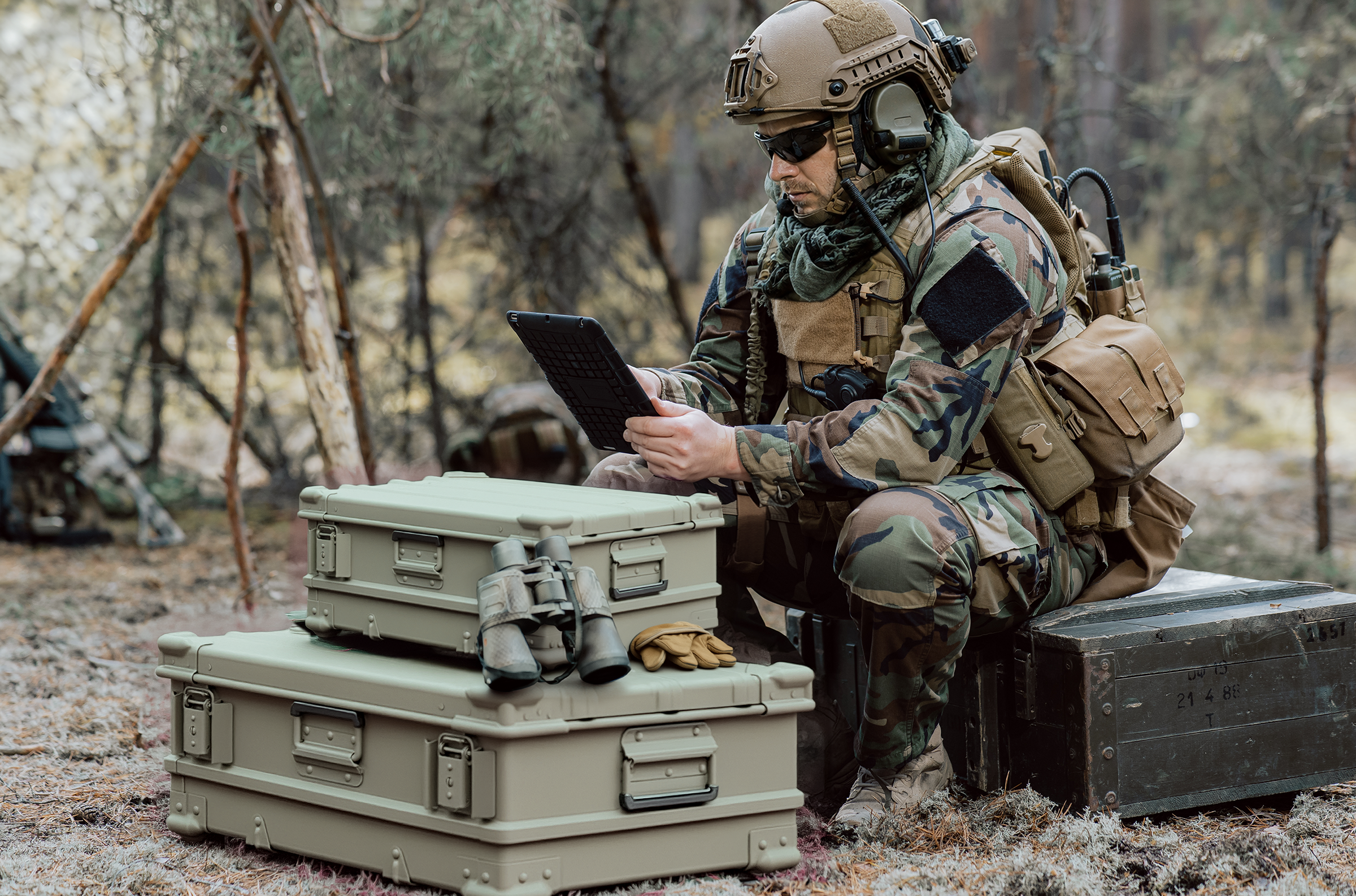
MIL-STD-810, MIL-STD-461, and IP ratings complement each other by covering different facets of device survivability. MIL-STD-810 provides physical durability, MIL-STD- 461 ensures electromagnetic compatibility, and IP defines sealing against dust and water. Together, they guarantee reliability and enhance operational readiness in harsh rugged environments.
The complexity of defense operations demands manufacture partners who understand both the technical requirements and the regulatory landscape of military standards. At DESAPRO, we practice innovation and precision ensuring our critical equipment is safeguarded at every step of your mission.